Guide
Sizing sleepwear you will never try on
Sleepwear is bought unseen more often than any other clothing, and it is the category where a size chart helps least. Two measurements taken off a garment you already own settle almost every case, and one rule about fabric settles the rest.
Published 7 September 2026 · 13 minute read · sources read 7 September 2026
Start with the piece
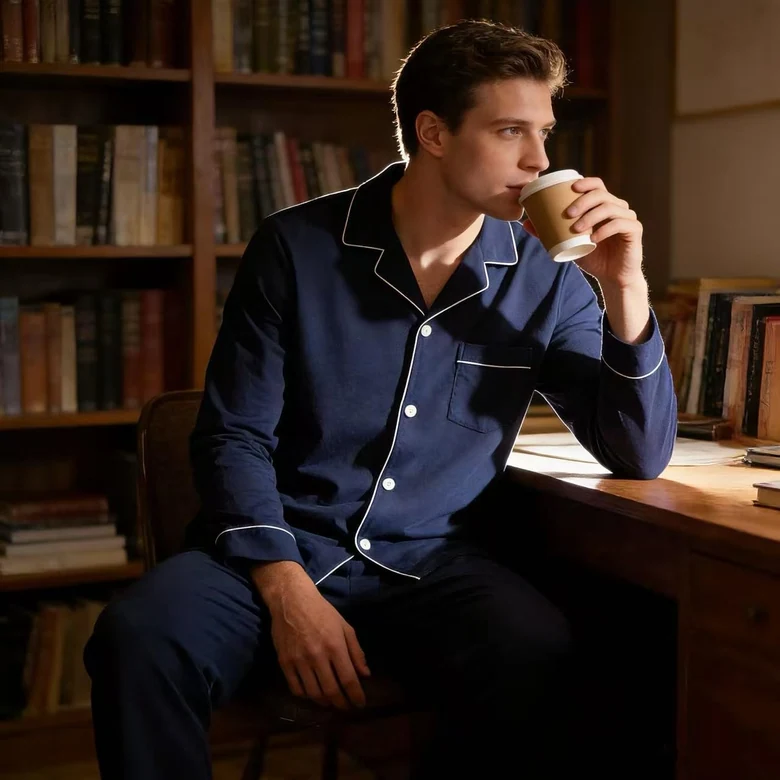
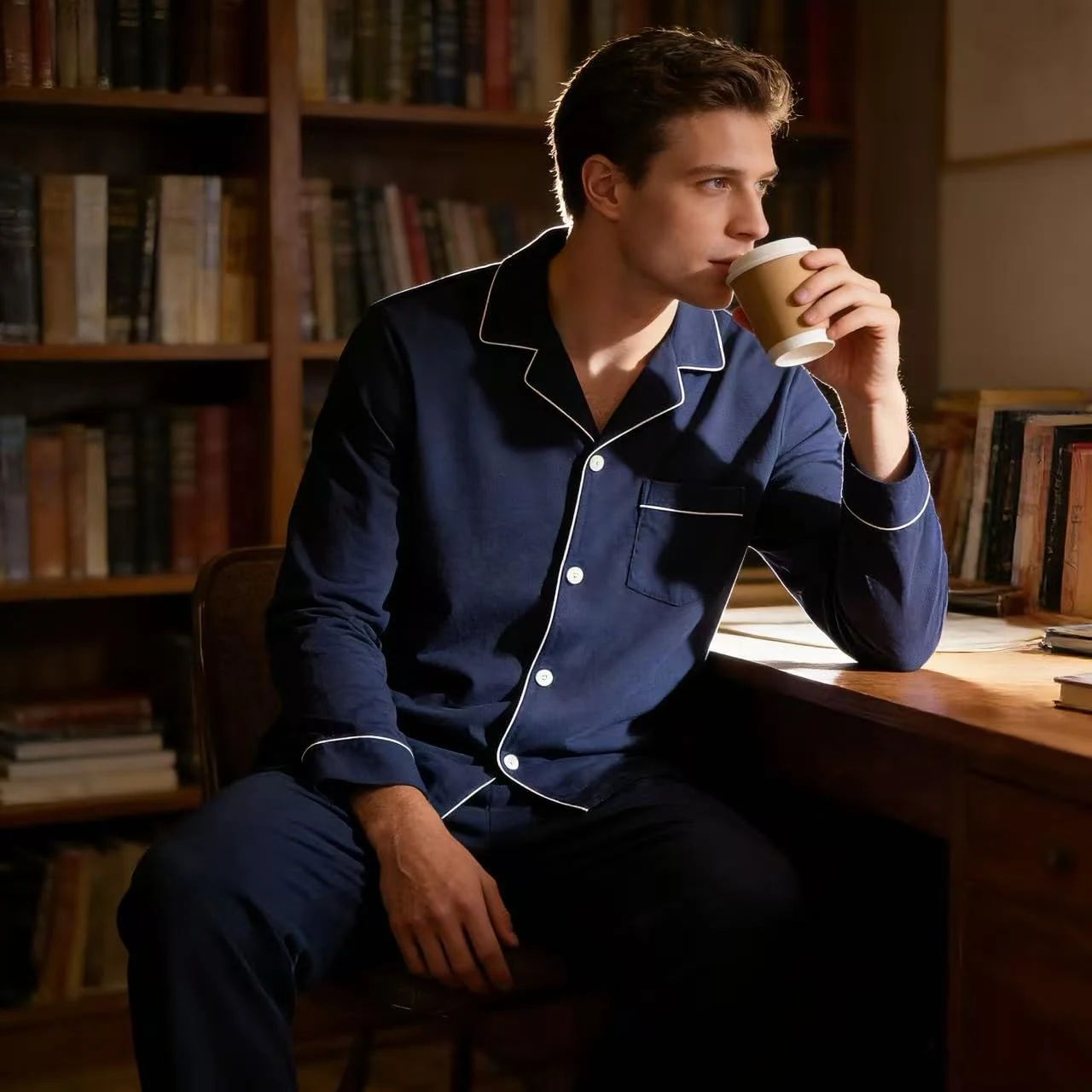
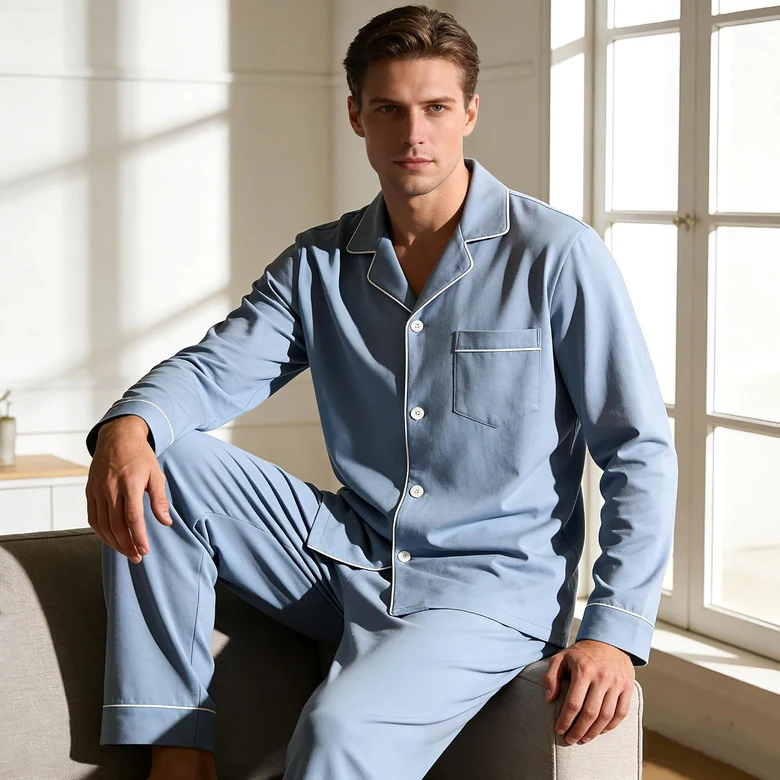
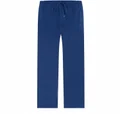
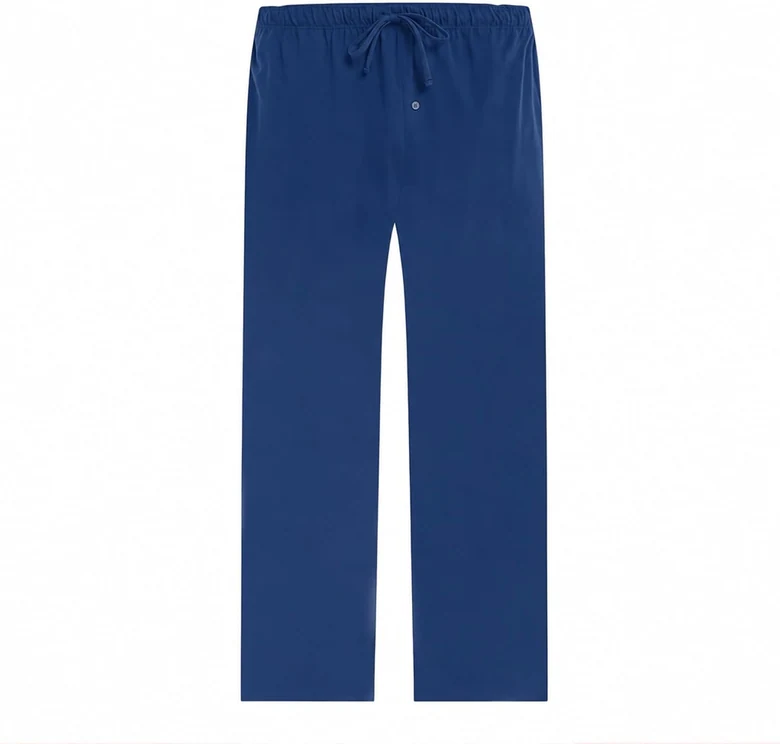
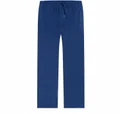
Men's Cotton Pajama Set, Navy
cotton · buttons
4.3 out of 5 · 2,352 ratings




Size L only in this colour
$26.98

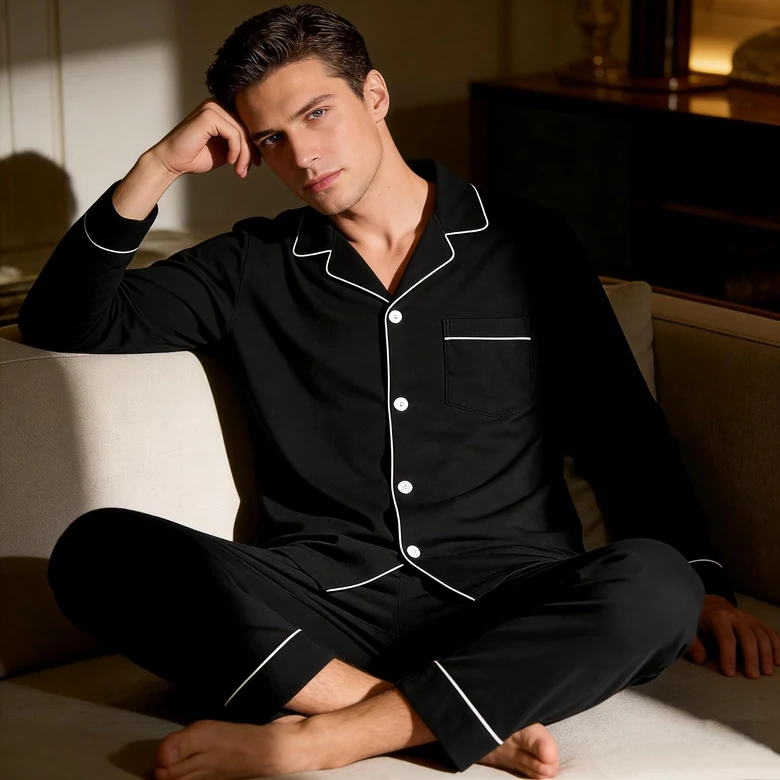
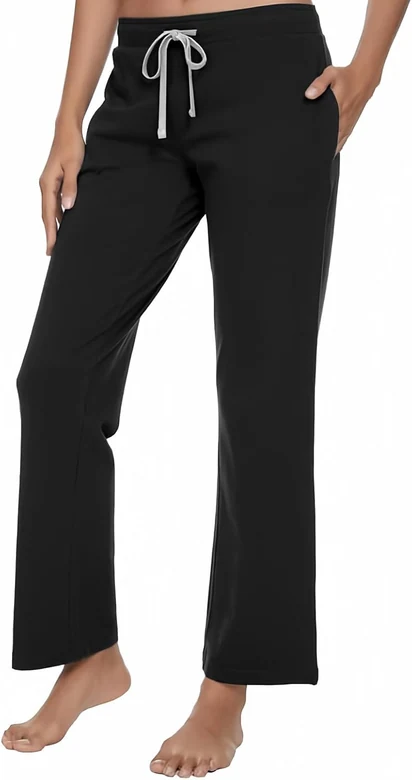
Men's Cotton Pajama Set, Black
cotton · long sleeve · buttons
4.3 out of 5 · 2,352 ratings
Size XL only in this colour
$31.29
Why sleepwear sizing is its own problem
A shirt is judged standing up in front of a mirror. Sleepwear is judged lying down, on a sofa or in a bed, with the light off. Almost nothing that makes a shirt fit well matters here, and two things that barely matter in a shirt decide everything: how the waistband sits after an hour of not moving, and whether the top rides up when you turn over.
That is why the sizing advice you know from day clothes leads you wrong. A woven shirt that fits closely reads as smart. A woven pyjama top that fits closely reads as a bad night. The whole category is cut loose on purpose, and the size you take is the one that stays loose after four washes rather than the one that fits in the first hour.
The catalogue here is 573 pieces across 6 shelves, and the sizing question splits by shelf rather than by size. A robe and a pair of lounge bottoms are graded by different logic, and the same letter on the label means a different thing on each.
The two measurements that settle it
Do not measure yourself. Measure a garment you already own and like, laid flat on a table, and compare numbers to numbers. Body measurements taken at home move by an inch depending on how you hold the tape and how much breath you are holding. A garment lying flat does not move.
For a top, measure across the chest from seam to seam and double it. That is the number that decides whether the top pulls when you lie on your side. For a bottom, measure the waistband flat, relaxed, without stretching it, and double that. Those two numbers answer most of what a chart cannot.
Two more, only if the piece is long: shoulder seam to hem on a top, and waistband to hem on a bottom. A pyjama top that is an inch short in the body rides up every time you turn over, which is the single most common complaint in the reviews of every brand in this category, ours included.
Where the tape goes wrong
Measure the garment cold and dry, not straight out of a dryer, and not while it is stretched over a hanger. Knit that has just been warmed reads up to half an inch wider than it will be an hour later. That half inch is exactly the margin people are trying to resolve when they measure.
Paired sizes, and why a robe has them
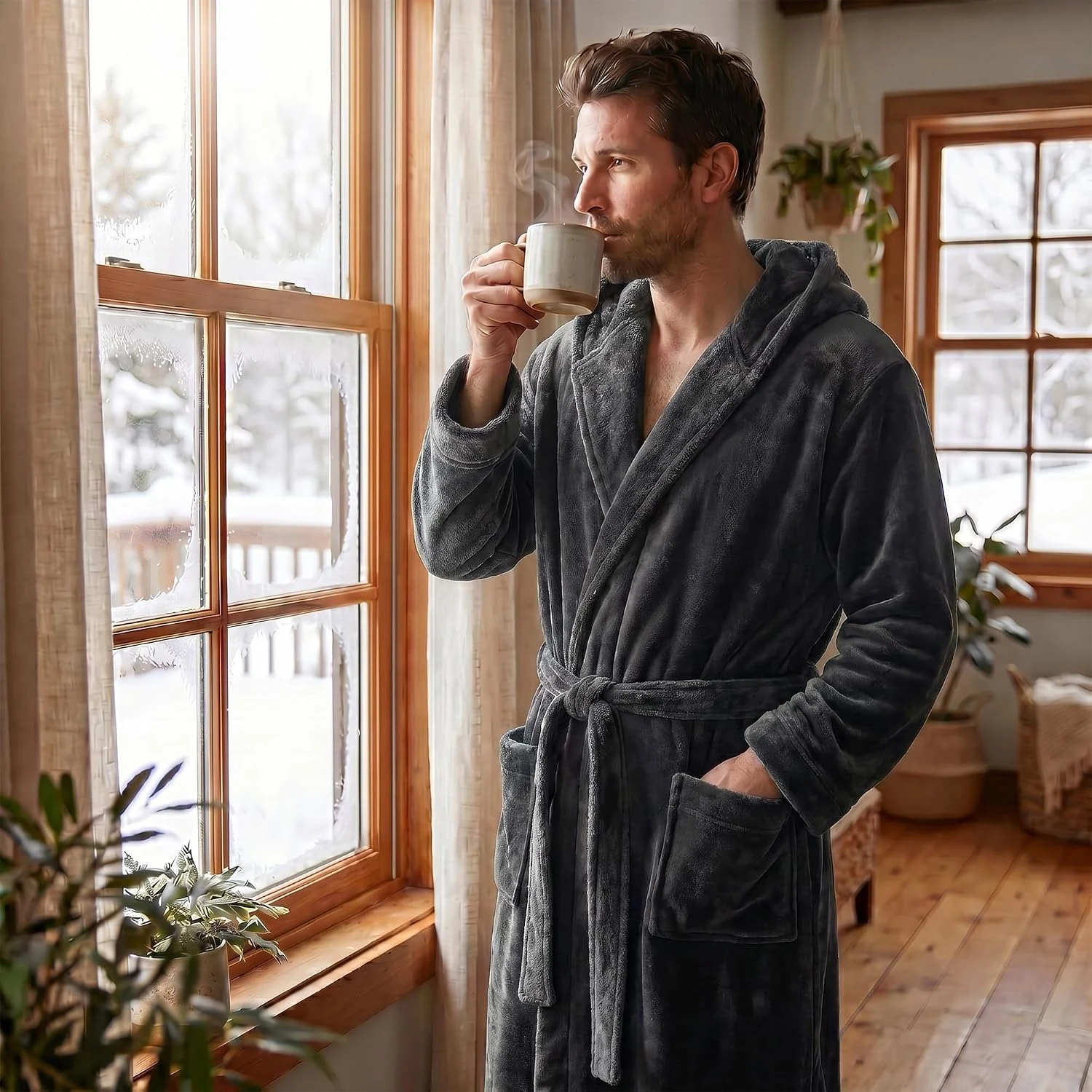
Several styles here are graded in pairs rather than single steps: S/M, L/XL, 2XL/3XL, 3XL/4XL. A paired size is not a compromise or a shortage. It is how a garment that wraps rather than fits is normally made: the tie does the adjusting, so one step honestly covers two.
| Paired step | Pages with a price | What it means |
|---|---|---|
| S/M | 39 | one step covers two, because the piece wraps or hangs |
| L/XL | 32 | one step covers two, because the piece wraps or hangs |
| 2XL/3XL | 30 | one step covers two, because the piece wraps or hangs |
| 3XL/4XL | 7 | one step covers two, because the piece wraps or hangs |
On a robe, take the larger pair if you are on the line. A robe that wraps with three inches to spare is a robe. One that meets exactly at the front is a dressing gown that keeps opening. On a onesie the same rule applies for a different reason: the body length is what runs short first.
Knit gives, woven does not
Fabric decides which way to lean, and it decides more than the cut does. There are four families on this site and each behaves differently under the same size label.
| Fabric | Pages with a price | What it does | Between two sizes |
|---|---|---|---|
| Cotton, woven | 126 | holds its shape, creases, does not give | take the larger size |
| Knit | 81 | gives across the chest and springs back | take the smaller size |
| Fleece | 215 | thick, gives a little, adds bulk at the waist | take your usual size |
| Satin | 18 | slides rather than stretches | take the larger size |
The rule underneath the table is simple. A knit gives across the widest part of you and springs back, so the smaller size ends up comfortable and the larger one ends up baggy at the shoulder. A woven does not give at all, so the larger size is the one that still works after the cotton has taken its first shrink.
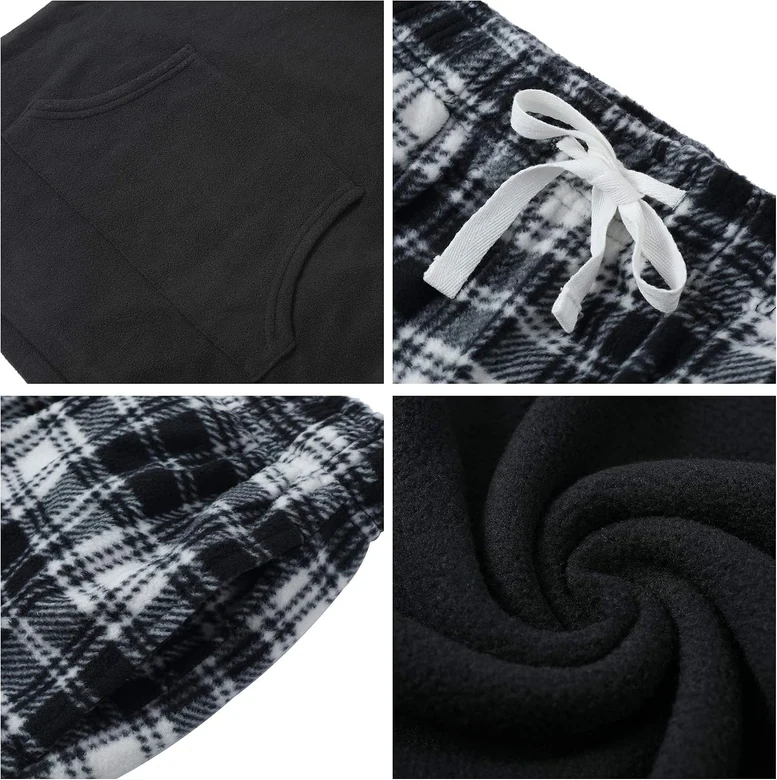
Fleece sits between the two and behaves like neither: it does not stretch much, but it adds half an inch of bulk everywhere, and a fleece set in your usual size therefore feels tighter than a cotton set in the same size.
From the bench
Men's Cotton Pajama Set, Navy
cotton · buttons
4.3 out of 5 · 2,352 ratings
Size L only in this colour
$26.98
The waistband forgives, the rise does not
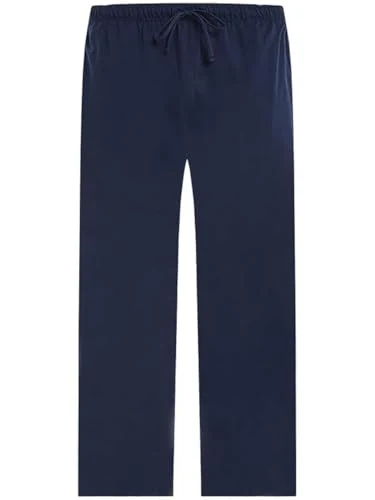
Every bottom on this site has an elastic waist, and 243 of 573 pieces add a drawstring. That combination is why the bottom half forgives a size in either direction and the top half does not.
What the waistband cannot forgive is the rise: the distance from the waistband to the crotch seam. Too short and it pulls every time you sit down. Too long and it bags. The rise is graded with the size and cannot be adjusted by a drawstring, and that is why we say take the smaller size on a bottom if you are between two. The waist will close. The rise will not grow.
The one exception
Fleece bottoms. The pile adds bulk exactly where the rise is shortest, and reviews for fleece bottoms across this category say the same thing: order your usual size, not the smaller one.
What the ladder on each page is telling you
Under every product page there is a row of sizes. It is a real ladder, not a menu: it shows the sizes of that exact colour that carry a price in the current update, and each step is its own page with its own figure.
| Size | Pages with a price | What it means on our grading |
|---|---|---|
| S | 85 | on almost every style |
| M | 109 | the two steps that sell out first |
| L | 99 | the two steps that sell out first |
| XL | 96 | on almost every style |
| 2XL | 60 | graded, not redrawn |
A missing step means one of two things: that size is not made in that colour, or it has no price in the current update. It does not mean the size is coming. If a colour shows fewer steps than it did last month, the colour is thinning rather than restocking.
Colours of one style are linked from each page as well, and switching colour can change which sizes exist. This is the most common surprise in the whole catalogue: the navy runs to 3XL and the grey stops at XL, because they are separate pages that happen to share a pattern.
Between two sizes, by shelf
Shelf by shelf, if you would rather not read the rest:
- Pajama sets. Size by the top. Take the smaller size on a knit set and the larger on a woven one. The bottom will follow either way.
- Robes. Take the larger pair. A robe is meant to wrap, and 139 of the pages here are cut for that.
- Bottoms. Take the smaller size unless the fabric is fleece. 173 pages, all elastic-waisted.
- Sleep shorts. Your usual size. The inseam is short on every pair, and nothing here is cut long.
- Onesies. Take the larger size and think about height rather than width.
- Sleep tops. Smaller on a knit, larger on a woven, and check the body length if you are tall.
From the bench





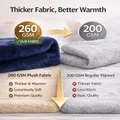
Washing is a sizing decision
A garment that fits when it arrives and does not fit after a month was not sized wrong. It was washed wrong, and the care rule is unusually clear about what the label owes you here.
Care labels must state what regular care is needed for the ordinary use of the product.
16 CFR 423, Electronic Code of Federal Regulations, read 7 September 2026
That is the floor: every piece of sleepwear sold in the United States has to tell you how to clean it. What people miss is the second half, the part about drying, where the wording is looser than it looks.
Tumble dry means that a high, medium, or low temperature setting can be used.
16 CFR 423, Electronic Code of Federal Regulations, read 7 September 2026
Read that carefully. A tumble dry symbol without a temperature is a permission, not an instruction: it means high heat will not destroy the garment, not that high heat is a good idea. Cotton shrinks on the first hot cycle and keeps a little of it. Fleece does something worse and quieter, matting the pile at the cuff and the seat until the piece looks old while still measuring the same.
So the sizing advice and the care advice are the same advice: buy the size that fits now, wash it cold, dry it low, and it stays the size that fits. Buying a size up to allow for shrinkage is planning for a wash you do not have to do. The care guide on this site goes through the rest of that label line by line: washing sleepwear so it lasts a second winter.
Men's and women's blocks are not the same grading
Almost every style here is cut on one block or the other, and the two are graded differently in ways the letter on the label hides. 277 pages are cut on the men's block and 291 on the women's.
The men's block adds width faster than length as the sizes go up, so a men's XL is noticeably wider than a men's L but only a little longer. The women's block does the opposite through the middle of the range, adding length and shaping before it adds width. That is why a woman who takes a men's medium in a t-shirt often needs a women's large in a pyjama top: the shaping is where the difference lands.
The practical rule: if you are buying across the block, size by the chest measurement rather than by the letter, and expect the length to surprise you. On a bottom the difference is smaller because the waistband is elastic on every pair, and the rise is where you will feel it if anywhere.
Unisex pieces
A few pages here are cut unisex, which in practice means the men's block with a slightly shorter body. If you are between two on a unisex piece, take the size you would take in men's rather than in women's.
What the reviews argue about most
Reading through what people write about sleepwear across this whole category, the same four arguments come up, and three of them are sizing questions wearing a different hat.
- "Runs large." Usually a woven set on someone expecting a knit. Woven pyjamas are cut loose because they do not stretch. That room is deliberate and it is not the same as a size error.
- "Shrank after one wash." Almost always cotton at high heat. The size was right. The dryer was hot. This is the one complaint the buyer can prevent entirely.
- "Top rides up." Body length, not width. A size up fixes it and makes the shoulders too wide, and measuring shoulder-to-hem on a top you already own is worth the two minutes for exactly that reason.
- "Waistband too tight after an hour." The rise, not the waist. A drawstring cannot fix a short rise, and it is the reason we say take the smaller size on bottoms only when the fabric is not fleece.
The fourth argument, about warmth, is not a sizing question at all and belongs to the other guide.
From the bench
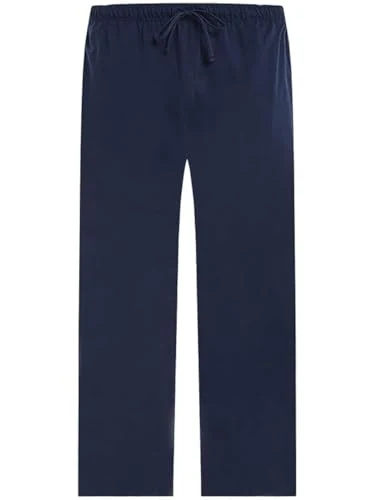
A worked example, start to finish
Here is the whole method on one purchase, so it is clear how little work it actually is.
Say you want a cotton set for a bedroom that sits around seventy degrees. Take a pyjama top you already like and lay it flat. Chest, seam to seam: nineteen inches, so thirty-eight around. Shoulder to hem: twenty-eight inches. Those are your two numbers.
Now the fabric rule. Cotton is woven, so it does not give, so between two sizes you lean up rather than down. If a size chart puts thirty-eight inches at the top of medium, take large: the medium will fit today and be tight after the first wash takes its half inch.
Then the ladder on the page. If large is missing from that colour, the choice is a different colour in large or a different style, not a medium in the colour you wanted. A size that is not on the ladder is not available, and waiting for it is usually waiting for nothing.
Last, the bottom. It comes with the set and is graded to the same size, so there is nothing to decide. If you were buying the bottom on its own, you would measure the waistband flat, double it, and lean down instead of up.
Total: two measurements, one rule about fabric, one glance at the ladder. Everything else on this page is the reasoning behind those four steps.
One more habit worth building: write your two numbers down somewhere you will find them again. Chest doubled and shoulder-to-hem for tops, waistband doubled for bottoms. They do not change often, and having them saved turns every future purchase in this category into a ten second decision instead of a twenty minute one. It is the single most useful thing in this guide and the easiest to skip.
Buying for someone else
Sleepwear is bought as a present more than any other clothing on this site, and buying it for somebody else changes the advice in two specific ways.
First, you cannot measure their garment, so use the one thing you can ask without spoiling the surprise: what size they buy in t-shirts. Then move one step in the direction the fabric says. A knit set in their t-shirt size will be right. A woven set one size up from their t-shirt size will be right. That single substitution is accurate far more often than a body measurement guessed from a photograph.
Second, prefer the shelves that forgive. A robe in a paired size forgives almost anything, and robes are the most common present in this category for that reason and why 139 of the pages here are robes. Bottoms with a drawstring forgive a size in either direction. A woven pyjama top forgives nothing, and it is the worst present of the six shelves for exactly that reason.
The colour problem
Colour names are names rather than measurements, and screens shift them. A navy on one monitor is a charcoal on another. If the colour matters, prefer the ones nobody argues about: black, grey, and the plaids where the pattern carries the identification instead of the shade.
And check the ladder before committing to a colour. It is a small disappointment to pick a colour and then find the size you need lives only in the other one.
What we cannot tell you
Before the honest limits, one more table, because it answers the question people actually arrive with: which shelf has the size range you need. Steps below count pages that carry a price today.
| Shelf | Smallest step on the shelf | Largest step | Pages with a price |
|---|---|---|---|
| Pajama Sets | S | 2XL | 161 |
| Robes & Bathrobes | S/M | OS | 139 |
| Pajama & Lounge Bottoms | S | OS | 173 |
| Sleep Shorts | S | OS | 38 |
| Onesies & Jumpsuits | S | 2XL | 34 |
| Sleep Tops | S | 2XL | 28 |
Two things fall out of that table. The plus range is real rather than a token step at the end of a row: it exists on most shelves, and where it does not, the shelf itself is small. And the paired steps cluster on robes and onesies, which are the two shapes that wrap or hang rather than fit.
What we cannot tell you
Two things this guide cannot settle. The first is how a piece will look on you, which no measurement predicts and no photograph on a white background has ever predicted. The second is how warm you sleep. A set that is perfect at sixty-eight degrees is unbearable at seventy-four, and that has nothing to do with size.
The public guidance on sleep is consistent about the room rather than the clothes:
Keep your bedroom quiet, cool, and dark (a dim night light is fine, if needed).
National Heart, Lung, and Blood Institute, Healthy sleep habits, read 7 September 2026
Which is the other half of choosing sleepwear, and it has its own guide: what fabric weight does to a night. Between the two of them, the size question usually turns out to have been a warmth question all along.
Sources
- 16 CFR 423, Care Labeling of Textile Wearing Apparel, Electronic Code of Federal Regulations, read 7 September 2026.
- Healthy sleep habits, National Heart, Lung, and Blood Institute, read 7 September 2026.
Before you go
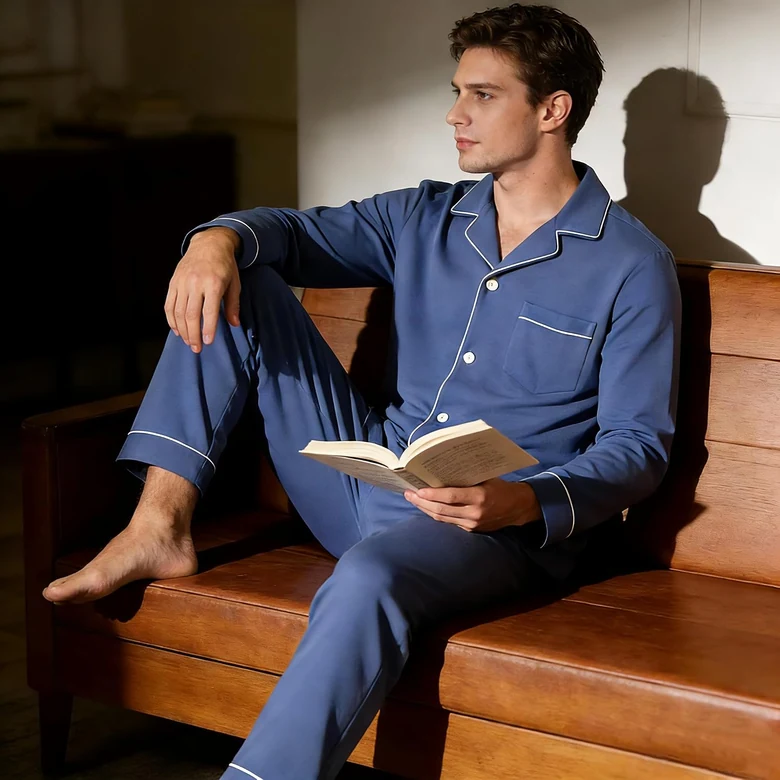
Men's Cotton Pajama Set, Dark Blue
cotton · buttons
4.3 out of 5 · 2,352 ratings
Size S only in this colour
$33.29

Men's Cotton Pajama Set, Khaki
cotton · buttons
4.3 out of 5 · 2,352 ratings
Size L only in this colour
$36.99